
Tokyo Melody: A Film about Ryuichi Sakamoto
Remastered 4K version of the 1985 documentary only gets better with time.
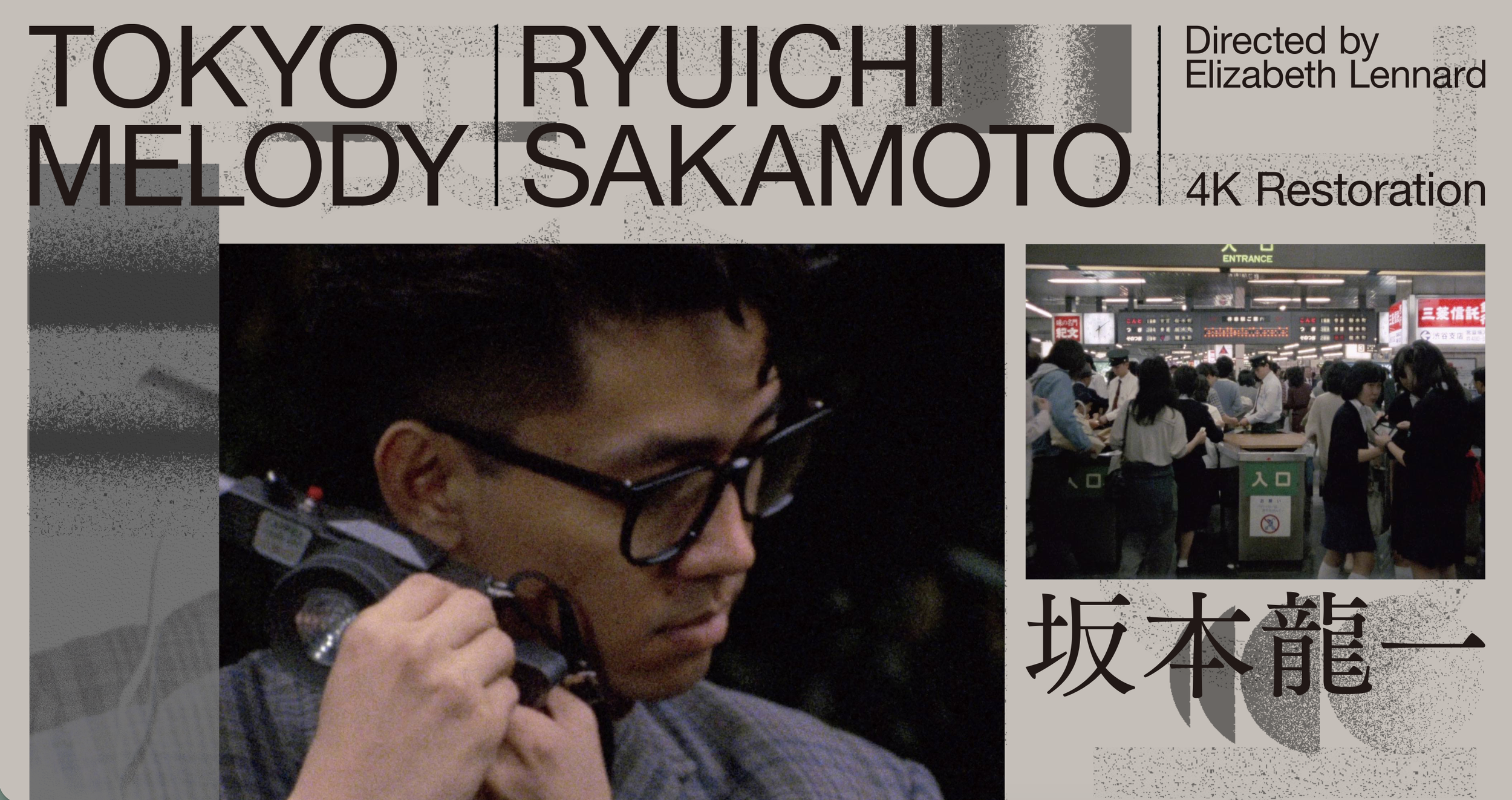
I’d seen various clips on YouTube from Tokyo Melody but never the whole movie so I was pleased to know that a new 4K restoration was becoming widely available. While it is unlikely to play for long in cinemas, I’d urge you to see it on screen because it adds a great dimension to the aliveness of the footage, bringing it appropriately to a venue that mirrors the constant performance that Ryuichi Sakamoto lived.
SOUND
In particular, I was fortunate to see it in a real cinema-lover’s theater with excellent sound and picture. I was impressed by how vibrant and organic the largely electronic instruments and background sound were given YMO’s heavy technology-based image and thin-sounding albums. I’ve never been able to really get into them because of the particularly constrained, bass-light mixes they seem to have.
This difference was particularly stark at the end of the film when they cut from Sakamoto creating a song in the studio to the same song played from the finished album. The album sound is compressed and telephone-like in comparison to the living, breathing sounds captured in the studio at time of creation. Having heard many master tapes and seen how much is lost in final mix-down I wonder if a time will come when we abandon the need to mix for iPhone speakers and lowest common denominator and can release at least two versions for those who can appreciate the higher quality. In the same way that 4K is now widely expected by consumers for even Netflix content, we really need a similar standards to not just bit depth and rate for audio, but the actual dynamic range and separation of instruments.
PICTURE
In addition to the delightful sound presentation, the picture restoration is carefully done. The footage is sourced from the original 16mm and it is wonderfully stabilized and tastefully degrained without losing any of the charm and feel of film. In this way, contrast is admirably restrained and nostalgic but also allows us to easily adapt to an unvarnished window into early 80s Tokyo.
The colours are realistic and muted, more like the human eye sees things than modern video cameras or cinema style pretends. It was extremely refreshing to have this “unbiased” window as most of the shots are up close of Sakamoto, often showing intimate daily life or him playing for the camera as a kid would. Ironically, the imagery and content in no way feels dated for this reason. It was honest then and the restoration seems to give even more access to that honesty.
While it may have played as arty or cutting edge at the time, compared to the hugely processed and commercialized style of today’s Instagram reels or Netflix movies, it is almost like a personal diary film by an amateur.
STRUCTURE
Presented as a kind of intimate hand-held vignette, Tokyo Melody humanizes YMO and Sakamoto to a degree that is hard to get from listening to the records or from the slick modern art legend he had grown into before his death in 2023.
The clever use of on-the-street vignettes cut with concert and studio footage really shows the integration of art into Sakamoto’s entire life. Even a banal shot of him coming out of his apartment and getting into his driver’s car will not go amiss to the keen-eyed. The completely custom entryway, as well as the customized car with cell-phone shows not just the 80s decadence of Tokyo but also just how particular Sakamoto was, and how cool. Even watching today, it is hard not to be awed by the complete control and integration he wielded with technology, his body and his persona. It reminded me of some David Bowie clips throughout the years. Clearly this was a fully invested creation of his entire life. At one point he says that he learned from Bowie how to still be himself in the wake of great fame, insinuating that it is the only way an artist can actually survive fame.
The opening and closing concert footage of YMO again far exceed the energy of the records and especially the groove of the drumming and Sakamoto himself show that live was probably what established their international success. As mentioned, seeing this live in a theater now is an invaluable way for new generations to get into his music.
Various close-ups of Sakamoto reciting words or poetry were probably originally used for effect or artistic points, but after 40 years, they show simply as him expressing who he was.
TECHNOLOGY TIME CAPSULE
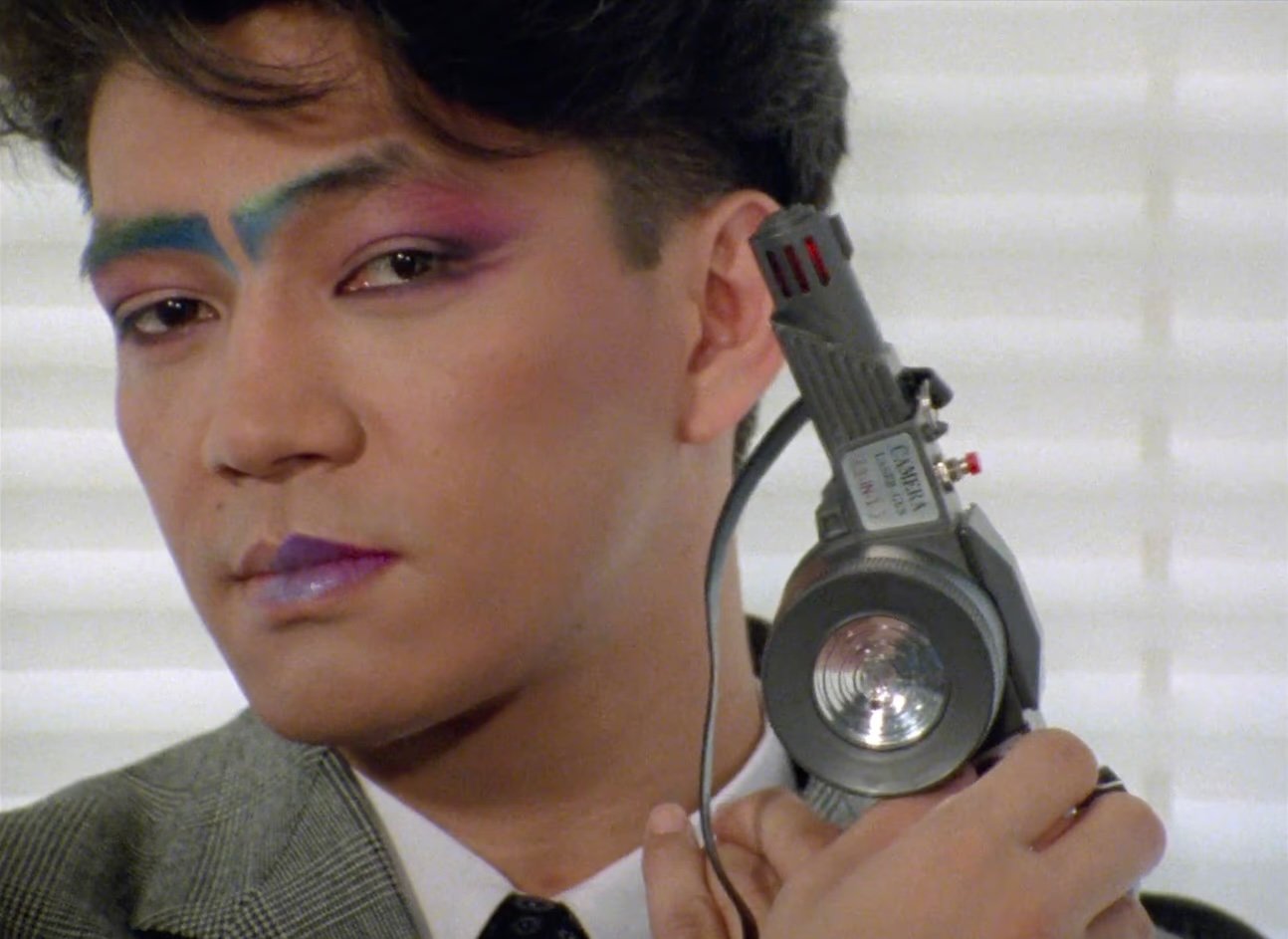
It’s hard not to be struck at the difference in technology between now and then—not particularly the relative power, but for the conspicuous lack of network function in 80s tech. While the TV, phone and 3D soundwave editor of his Fairlight synchronizer seem at first simple, in the hands of Sakamoto, they seem to be every bit as useful, perhaps more than their modern counterparts. It’s envious watching him deftly playing them all like a magician doing tricks. The sheer physicality of his body is impressive.
While technology now is based on inundating our attention and capturing us as the product, the analog tech of the movie seems the opposite. It served the master. When we see him stabbing at tv buttons or rapidly switching through Fairlight settings, it’s hard not to see the same basic movements of a kid playing with an iPad today. It begs the question of whether computer technology requires a certain brain interaction that leads to this particular kind of movement. The difference though is 80s tech created this excitement by means of a controlled end- the end the user wanted which was bounded by the essential function of the machine. Today it is the bounded by the end the provider wants, wrapped in an interface that feels like the user is in control but is not.
In a similar light, it is a bit shocking to see the variety and depth of advertisements, signs and design styles in 80s Tokyo. It appears more dense and vibrant than now when styles and media have converged only around the Instagram square, the Netflix trailer, and the influencer stare.
The plethora of fashion styles, magazine titles, even the dance routines of the Yoyogi clubs, showed that the name of the game was to search out your style in a physical way, to join others in that niche, and to show off out of pure self-enjoyment. It was perhaps the peak of expansive capitalism, that is giving each consumer the widest possible freedom to choose who they can be as an individual, whereas now is the peak of reductionist capitalism, that every individual choice is coopted into an outward facing silo of social media validation. Worst of all it is validation by the void, a simple numerical rating of ones value.
Hopefully kids and adults alike will watch this film and notice that the technology without the network allows the individual to be empowered. When you add the network, the audience shifts to the faceless crowd and their pleasure as opposed to your own. Artists like Bowie and Sakamoto specifically created value because they did not “sell out” from their intrinsic identities for the crowd. Tokyo Melody shows us a roadmap of how we can go back to that. Gen Z is already learning this on their own with their readoption of analog technologies and dumb phones.
CONCLUSION
While I was never a big fan of YMO or Sakamoto, I positively adore this film. Not only does it elevate their music to a much higher level than I think the albums do, it is an insightful and valuable documentary into 80s Tokyo and the origin of many of the technological trends we now face. The fantastic sound and picture quality (given the original materials) is immersive and provokes both nostalgia and simultaneously a realness and currentness of the material that makes you want to adopt some of the older ways of living. Whether you are a YMO fan, music lover, or simply appreciate an honest and well-crafted film, it’s a must watch.
AVAILABILITY
THE RATING
10/10 Absolute
10/10 Relative
Your donation helps keep the reviews coming!